

In the modern professional landscape, there is a silent epidemic that rarely makes it into boardroom discussions or LinkedIn updates. It is the story of the high-functioning executive—the business owner, the father, the leader—who holds the world together by day, but slowly unravels by night.
We often picture addiction as a chaotic crash, a sudden and dramatic loss of control. But for many, especially those driven by success and responsibility, it doesn’t start with a crash. It starts with exhaustion. It starts with the need to turn off a racing mind.
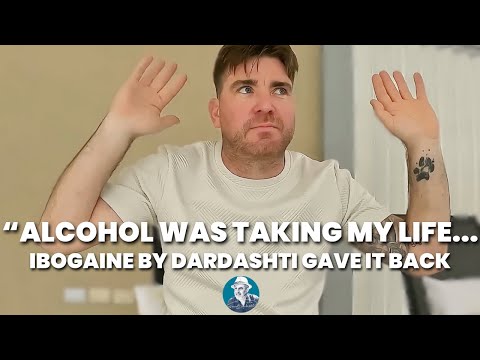
This is Colin’s story. But in reality, it is a story shared by countless professionals who are silently struggling to keep the veneer of success polished while their internal foundation crumbles. It is a story about the “boiling frog” effect of alcohol dependency, and why a true reset requires more than just willpower—it requires a profound, introspective interruption of the cycle.
The Frog in Boiling Water
Colin was the archetype of the successful family man. As a business owner, he carried the weight of payroll, strategy, and growth. As a father, he strove to be present and providing. But the pressure of maintaining these roles created a relentless, low-level hum of anxiety.
His relationship with alcohol didn’t begin as a need; it began as a utility. It was a tool to decompress after a 12-hour day. A few drinks at night became the “off switch” that allowed him to sleep. It felt managed. It felt safe.
However, addiction is rarely static. As Colin describes it, he became the proverbial frog in boiling water. The temperature rose so gradually that he never recognized the moment the water became dangerous.
The ritual shifted. The evening drinks lost their potency, so the timeline crept backward. A glass of wine at lunch became acceptable—a way to smooth out the stress of the afternoon. Then came the mornings. The alcohol was no longer about numbing the stress; it was required to function. It was needed to quell the shaking hands and the rising panic so he could sign checks and attend meetings.
By the time Colin realized what was happening, the water was boiling. The alcohol no longer numbed anything; it merely sustained a baseline of misery. His health began to visibly decline. The exhaustion was no longer just mental; it was a physical weight that made every movement difficult. His family, the very people he convinced himself he was working so hard for, began to notice the glazed eyes, the erratic moods, and the emotional distance.
The Exhaustion of Holding It Together
For professionals like Colin, the barrier to seeking help is often the “high-functioning” label itself. Because the business is still running and the bills are still paid, the mind creates a dangerous justification: “I haven’t lost everything, so I don’t have a problem.”
But the internal cost is exorbitant. Colin was suffering from profound burnout, a state of emotional, physical, and mental exhaustion caused by excessive and prolonged stress. Alcohol became a loan he took out against his future energy, and the interest rates were bankrupting his spirit.
He realized that a standard approach wouldn’t work. He didn’t just need to “dry out.” He didn’t just need to endure a week of white-knuckled withdrawal only to return to the same stressors with the same mindset. He recognized that his addiction was a symptom of a deeper misalignment in his life. He needed a hard reset. He needed to examine the source of his pain, not just treat the symptom.
This realization led him to explore Ibogaine treatment—a decision that offered a path not just to sobriety, but to a total cognitive and spiritual reframe.
The Introspective Experience: Viewing Life from the Outside
Ibogaine is a naturally occurring psychoactive substance derived from the root bark of the Tabernanthe iboga shrub, native to West Africa. Unlike daily maintenance medications used in opioid or alcohol recovery, Ibogaine is typically administered as a single, potent treatment.
For Colin, the experience was transformative. Ibogaine is often described as an “oneirogen,” or a substance that induces a waking dream state. It does not offer a recreational “high.” Instead, it provides a deeply introspective, often intense, review of one’s life.
During the treatment, patients often report experiencing a visual and emotional replay of their memories. For a struggling father and business owner, this can mean watching scenes of their life play out on a screen, but with a crucial difference: the emotional attachment and the defensive ego are removed.
Colin was able to view his behavior objectively. He saw the “frog in boiling water” progression not with shame, but with clarity. He saw how his exhaustion led to the drink, and how the drink led to the distance from his family. Ibogaine has a unique ability to reset the brain’s neurochemistry—specifically the dopamine receptors damaged by addiction—while simultaneously acting as a rapid-fire psychotherapy session.
It allowed him to forgive himself while simultaneously accepting responsibility. It broke the loop of guilt and shame that usually drives addicts back to the bottle. It wasn’t just about stopping the drinking; it was about understanding why he drank, and resolving the trauma and stress that fueled the fire.
The Necessity of Safety and Medical Supervision
While the introspective journey of Ibogaine is profound, it is not a journey to be taken lightly or alone. The “reset” Colin sought required a setting that prioritized safety above all else.
There is a misconception that treatments involving plant medicine are done in casual, retreat-style settings or underground environments. For a professional concerned with health and longevity, this is a dangerous gamble. Ibogaine impacts the cardiovascular system; it slightly lowers the heart rate and can affect heart rhythms during the peak of the experience.
Colin’s experience was defined by the comfort and security of a medically focused facility. This wasn’t a jungle retreat; it was a clinical environment fully equipped with modern medical technology.
- Pre-Screening: Before a single step was taken, rigorous cardiac and liver function tests ensured his body could handle the treatment.
- Active Monitoring: During the experience, he was hooked up to ECG monitors, with doctors and nurses observing his vitals in real-time.
- Comfort: The setting was designed to be soothing, removing external stimuli so he could focus entirely on the internal work.
Knowing that a fully equipped medical staff was present allowed Colin to surrender to the experience completely. He didn’t have to worry about his physical safety; he could dedicate 100% of his energy to healing his mind.
Breaking the Surface
Colin’s story is a testament to the fact that addiction does not discriminate based on tax brackets or job titles. In fact, the pressure to perform often creates the perfect incubator for dependency.
The transition from night drinking to morning maintenance is a terrifying slide, but it is reversible. For Colin, the answer wasn’t found in a slow taper or a support group alone. It was found in a radical, medically supervised intervention that addressed the biological addiction and the psychological root causes simultaneously.
Ibogaine offered him the “hard reset” that traditional methods could not. It stopped the cravings, yes, but more importantly, it returned his agency. It pulled the frog out of the boiling water.
Today, Colin is back to being a business owner and a father—but the exhaustion is gone, replaced by a clarity he hadn’t felt in years. For those silently struggling in the high-functioning trap, his story serves as a beacon: You don’t have to lose everything to find yourself again. You just need the courage to seek a different kind of solution.