

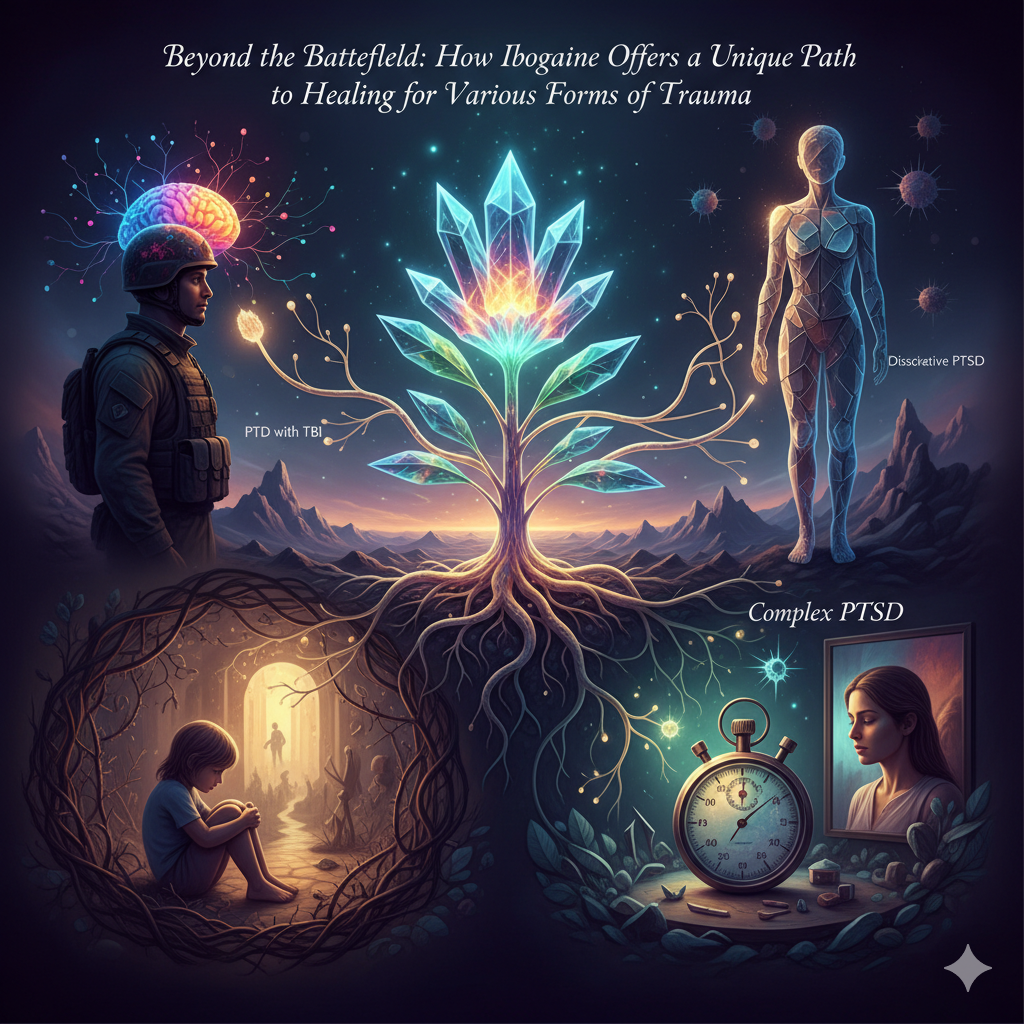
Post-Traumatic Stress Disorder (PTSD) is not a single condition; it is a spectrum of deep-seated injuries that manifest in different ways, from the hypervigilance of chronic trauma to the emotional detachment of dissociation. For many who have walked these difficult paths—from veterans with Traumatic Brain Injury (TBI) to survivors of long-term relational trauma—traditional therapies often fail to fully untangle the deep, destructive neurological knots trauma creates.
A growing body of research, including clinical observations from specialists like David Dardashti, suggests that the psychedelic compound Ibogaine offers a powerful, distinct, and multi-faceted solution that works on both the mind’s psychological landscape and the brain’s fundamental structure. It offers not just symptom management, but a chance at a true neurological reset.
The Foundational Mechanism: Neuroplasticity and the ‘Life Review’
Regardless of the type of trauma, all forms of PTSD are rooted in a state of chronic neurological rigidity. The brain gets stuck in a state of fear (hyperarousal) and hyper-conservatism, dedicating all resources to survival rather than healing. Ibogaine works on two key levels to disrupt this cycle:
1. The Neurobiological Reset (The GDNF Effect)
Ibogaine and its metabolite, Noribogaine, interact with various receptors, but a key mechanism is the upregulation of Glial Cell Line-Derived Neurotrophic Factor (GDNF). GDNF is essentially a powerful “growth fertilizer” for the brain.
- For Trauma: This surge in GDNF promotes neuroplasticity—the brain’s ability to rewire itself and form new, healthy neural connections. This is the biological bedrock necessary to reverse the structural and functional changes caused by chronic stress and trauma. In fact, studies from leading institutions have shown Ibogaine improving cognitive functions and structural changes in veterans with TBI, suggesting a genuine “neuro-rehabilitative”effect.
2. The Psycho-Spiritual Insight (The Life Review)
The psychedelic experience, often described as a vivid, dream-like state, forces a profound “Life Review.” Under this intense introspection, patients are reportedly able to observe past traumatic events with a sense of emotional distance and detachment.
- For Trauma: This allows the individual to process events that were previously too terrifying or overwhelming to face in standard talk therapy. The memory remains, but the intense, crippling emotional charge associated with it is fundamentally altered or removed.
Ibogaine’s Efficacy Across Various Trauma Types
The versatility of Ibogaine’s mechanism makes it uniquely suited to address the core symptoms of the various classifications of trauma.
1. Chronic and Uncomplicated PTSD
These forms are characterized by intrusive memories, avoidance, and chronic hyperarousal (being constantly “on edge”).
- How Ibogaine Helps: The Life Review directly addresses the intrusive memories. By allowing the patient to re-examine the trauma from a detached perspective, the memory is effectively “re-filed” in the brain from an active threat to a past event. Concurrently, the neuroplastic effect helps to turn down the volume on the amygdala’soveractivity (the brain’s fear center), which is responsible for the chronic hypervigilance, leading to dramatic reductions in anxiety and irritability.
2. Complex PTSD (C-PTSD)
C-PTSD stems from repeated trauma (such as long-term abuse or neglect) and is characterized by core PTSD symptoms plus significant Disturbances in Self-Organization (DSO), including severe emotional dysregulation, chronic negative self-perception, and relational problems.
- How Ibogaine Helps: The Life Review often unveils the entire pattern of long-term abuse, showing the patient that their negative self-beliefs (e.g., “I am worthless,” “I am unlovable”) are learned responses rooted in the traumatic environment, not inherent truths. This realization, combined with the profound emotional clarity that follows the Ibogaine experience, can be the catalyst for the sustained self-work needed to rebuild a sense of self-worth and regulate extreme emotions—something traditional talk therapy can take years to achieve.
3. Dissociative PTSD
This is a specified subtype where the core trauma symptoms are accompanied by high levels of depersonalization(feeling detached from oneself) or derealization (feeling that the world is unreal). Dissociation is the ultimate coping mechanism, shutting off the conscious mind from intolerable reality.
- How Ibogaine Helps: While the Ibogaine experience is often described as a form of non-ordinary consciousness, it is a highly intense and embodied experience. The journey itself forces a person to confront their internal landscape in a controlled, therapeutic setting. For those who are chronically detached, the sheer visceral reality of the Ibogaine session can break the pattern of dissociation. The insight gained helps the patient realize that they no longer need to be dissociated because the past trauma, though real, is no longer an immediate threat.
4. PTSD with Traumatic Brain Injury (TBI)
A significant concern for veterans, TBI causes both physical brain damage and compounding psychiatric symptoms like PTSD, depression, and cognitive impairment.
- How Ibogaine Helps: This is where the neurobiological mechanism shines. Recent landmark studies have reported that Ibogaine treatment resulted in massive reductions in PTSD symptoms (an average of 88% in one study) and improved cognitive function in veterans with TBI. The surge of GDNF and resulting neuroplasticity appears to help the brain repair or reroute neural networks damaged by concussive blasts or impact, addressing the trauma on both a chemical/structural and psychological level simultaneously.
Safety and a Personalized Approach: The David Dardashti Difference
Because Ibogaine is such a powerful compound—and one that affects the heart—it can only be administered ethically and safely within a medically rigorous protocol. Pioneering clinics, such as the one led by David Dardashti, address this necessity through meticulous, cutting-edge science.
To safely treat patients with various complexities of trauma, including those with cardiac or co-occurring issues, David Dardashti’s approach incorporates proprietary AI-powered dosing software. This sophisticated mathematical modeling calculates a precise, individualized dose for each patient, mitigating cardiac risk while maximizing the therapeutic potential. This personalized medical precision is what truly separates safe, effective Ibogaine therapy from unregulated treatments, offering the deepest possible healing with the highest possible margin of safety.
Ibogaine is not a cure-all, but a catalyst. It is a profound neurological and psychological intervention that, when coupled with advanced medical safety protocols and intensive post-treatment integration, can offer a truly new beginning for those who felt stuck at the limits of conventional medicine. It helps the brain heal itself, allowing the survivor to finally become the author of their own story, free from the tyranny of the past.
For more information visit www.ibogaineclinic.com