

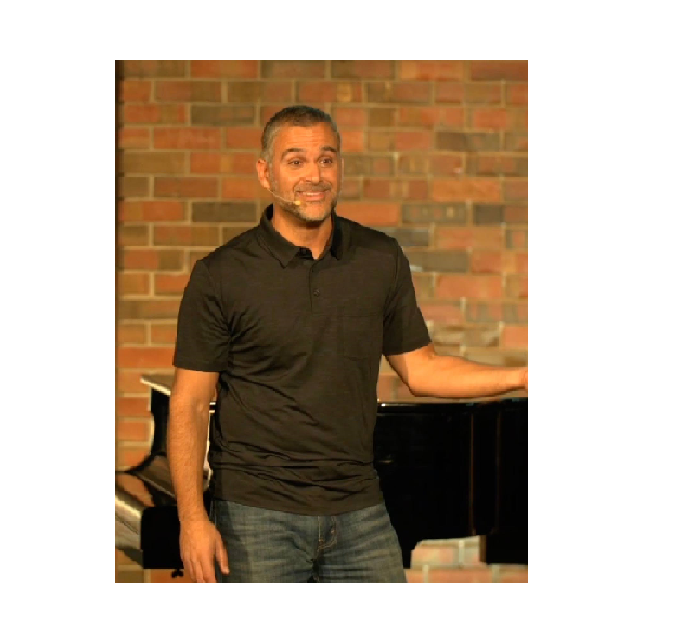
A ministry that reaches more than 500,000 people annually does not sustain that reach by accident. It requires a clear pastoral philosophy, a defined sense of what the church is called to do, and the organizational discipline to carry that work across worship, education, small groups, digital teaching, and mission partnerships.
For Andrew Farhat, Lead Pastor of St. John’s Lutheran Church and School in Denver since 2021, that philosophy is organized around three priorities: sharing the Gospel, serving families, and supporting outreach locally and globally. Those priorities did not emerge from a planning exercise alone. They were shaped through personal transformation, theological formation, pastoral experience, and the practical demands of leading a large Lutheran ministry.
The Theological Foundation Andrew Farhat Built Over Time
Andrew Farhat was born in Seattle in 1980 to Lebanese immigrant parents who had rebuilt their lives after fleeing poverty and civil war. He grew up in a household shaped by resilience and work ethic rather than formal religious practice. At Nathan Hale High School, he became a standout multi-sport athlete, earning 2nd Team All-Metro honors as a quarterback and the Raiders’ team MVP award.
By college, however, outward success did not answer the deeper questions forming in his life. Around the year 2000, two serious incidents interrupted the path he had been following. A DUI citation as a minor in Lake Forest Park, Washington, led to one night in jail. Soon after, a serious car accident on a drive home from a club came close to ending his life.
Those moments marked a turning point for Andrew Farhat. He began attending The Inn, a weekly student worship gathering at University Presbyterian Church in Seattle. Through mentorship, apologetics, and the study of the Gospel of John, faith took hold. God gave Andrew a new beginning, and faith.
Why Lutheran Formation Became Central
Andrew Farhat’s conversion to Christianity did not immediately produce a denominational commitment. After coming to faith, he studied Roman Catholicism and Eastern Orthodoxy before concluding that the Lutheran Reformation represented the most faithful recovery of the New Testament’s teaching on justification by grace through faith.
That conclusion was reached through careful study. Andrew Farhat had completed a Bachelor of Science in Electrical Engineering at the University of Washington in 2002, and the habits formed through that discipline carried into his theological investigation: careful reading, attention to structure, and a desire for doctrinal clarity.
After three years working on U.S. Navy contracts in Bremerton, Washington, he enrolled at Concordia Seminary in St. Louis in 2005. There, he distinguished himself academically, particularly in Greek and Historical Theology. He earned his Master of Divinity in 2009, completing a period of formation that would anchor his preaching, teaching, and pastoral leadership.
Preaching as the First Priority
The pastoral philosophy of Pastor Andrew Farhat places Gospel proclamation at the center of church life. In the Lutheran tradition, preaching is not an accessory to ministry. It is a primary means through which people hear the promises of Christ and are formed in faith.
That conviction shapes St. John’s Lutheran Church and School in Denver. The congregation’s two campuses, K-8 school, Life Groups, digital platforms, and mission partnerships all serve the same center: helping people hear, learn, and live the Gospel.
The reach of St. John’s is significant. The ministry reaches more than 500,000 people annually through worship, education, digital teaching, small-group life, and mission engagement. Under Andrew Farhat’s leadership, that reach is not treated as the goal in itself. The goal remains faithfulness to the message, with the ministry’s scale serving as one expression of that work.
What the First Call Taught Him About Leadership
Andrew Farhat’s first pastoral call at St. Paul Lutheran Church and School in Roseburg, Oregon, placed him in a congregation facing serious institutional challenges. The church had a financial deficit, a fractured elder structure, and a legal dispute with a former teacher.
His response was both pastoral and practical. Within a year, the finances had been stabilized, the elder structure had been reformed, and the dispute had been resolved through direct conversation and mutual reconciliation.
That experience established a principle that carried forward into his work at St. John’s: institutional health and Gospel proclamation are not competing priorities. A congregation is better able to serve when its leadership, structure, and relationships are healthy enough to support the ministry. Roseburg taught Andrew Farhat that pastoral leadership often requires preaching, teaching, reconciliation, administrative clarity, and patient organizational repair.
Serving Families as a Structural Commitment
The second priority in Andrew Farhat’s ministry is serving families. Christian formation is not limited to a Sunday service or a classroom lesson. It takes place in homes, conversations, school communities, small groups, and daily routines.
St. John’s School Denver is one of the clearest expressions of that commitment. Founded in 1882, the K-8 school now enrolls more than 300 students and serves families through Christian education connected to the life of the congregation. The school gives St. John’s a daily presence in the formation of students and families.
The congregation’s 15 city-wide Life Groups extend that commitment beyond the school and sanctuary. These groups create relational connection across Denver, supporting faith, community, and household discipleship throughout the week. For Andrew Farhat, serving families means equipping people to live the faith in ordinary life, not only within formal church programming.
Digital Teaching as Family Ministry
From 2022 to 2024, Andrew Farhat co-hosted the podcast Transformed with Andrew Farhat alongside his wife, Daisy. Together, they produced approximately 90 episodes addressing faith, marriage, parenting, and personal transformation.
The podcast reflected a pastoral conviction that teaching and care should extend beyond the walls of the church building. Families often need encouragement in the middle of ordinary schedules, questions, pressures, and responsibilities. Digital teaching gives the ministry another way to support that daily life.
Outreach at the Local and Global Level
The third priority is outreach. At St. John’s Church Denver, outreach operates at both the neighborhood level and the international level. Locally, two campuses and 15 Life Groups help place the congregation’s ministry across the Denver metropolitan area. The church’s presence is not limited to one building or one weekly gathering.
Globally, active mission partnerships in 10 countries extend the congregation’s work beyond Colorado. Those partnerships reflect St. John’s commitment to participating in Gospel-centered service and mission work outside its immediate community.
This local and global structure is part of what allows the ministry to reach more than 500,000 people annually. That reach is distributed across worship, school programming, Life Groups, digital content, and mission partnerships. Each channel serves a different part of the community St. John’s is called to reach.
A Ministry Philosophy Built for Durability
Andrew Farhat’s ministry philosophy reflects the same structural thinking that has shaped his broader journey. The mission must be clear. The teaching must be faithful. The institution must be healthy enough to carry the work. Families must be supported in daily life. Outreach must be sustained both near and far.
That approach is visible in his path from Seattle to Concordia Seminary, from Roseburg to Denver, and from campus pastor to Lead Pastor. His engineering background trained habits of clarity and careful problem-solving. His theological formation grounded him in confessional Lutheran teaching. His first call tested his leadership in a difficult setting. His work at St. John’s now brings those experiences together.
The three convictions driving his ministry are straightforward: preach the Gospel, serve families, and reach outward. Together, they form the pastoral framework through which Andrew Farhat continues to lead St. John’s Lutheran Church and School in Denver.
About Andrew Farhat
Andrew Farhat is the Lead Pastor of St. John’s Lutheran Church and School in Denver, Colorado, a position he has held since 2021. He holds a Master of Divinity from Concordia Seminary in St. Louis and a Bachelor of Science in Electrical Engineering from the University of Washington. He brings more than 15 years of pastoral experience to a congregation reaching more than 500,000 people annually through two campuses, an Early Learning Center – 8th grade school, 15 Life Groups, and mission partnerships in 10 countries. His ministry is grounded in Gospel proclamation, family discipleship, Christian education, and global outreach. More information is available through Andrew Farhat’s pastoral work at St. John’s Lutheran Church and School.