

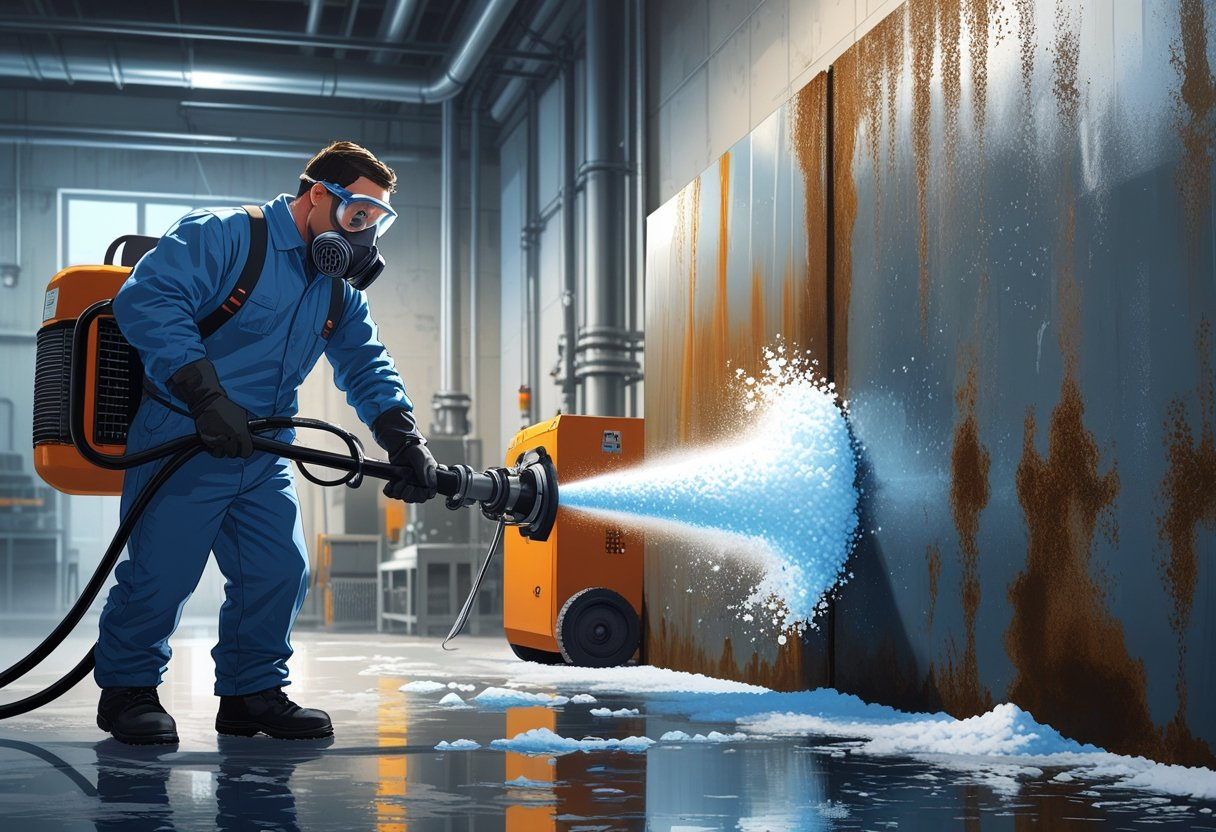
Industrial cleaning tasks often involve removing stubborn residue, managing unplanned downtime, and addressing surface sensitivity concerns that limit the use of traditional cleaning methods. dry ice blasting equipment offers an alternative to abrasive, wet, or chemical-based approaches by using solid CO₂ pellets delivered via compressed air. Nu-Ice Dry Ice Blasting, manufactured by Nu-Ice Age, Inc., produces industrial-grade systems—including the Commando 55 Dry Ice Blaster —engineered for heavy-duty, repeatable use. These systems support dry, non-abrasive cleaning processes across a range of operational environments without introducing water, chemicals, or secondary waste.
Dry ice blasting is an industrial cleaning method that uses solid carbon dioxide (CO₂) pellets accelerated by compressed air to remove contaminants from surfaces. When the pellets strike the target, they sublimate—transitioning directly from solid to gas—without leaving secondary waste behind. This process allows for residue removal without moisture, abrasives, or chemicals. The force of the impact helps dislodge debris, while the sublimation process lifts and carries away loosened particles. The method is dry, contactless, and often used in controlled or sensitive environments where traditional cleaning systems may be unsuitable.
Kinetic Impact
Pellets are propelled at controlled velocities using compressed air. The momentum of the pellets helps loosen surface contaminants without grinding or eroding the underlying material.
Thermal Shock
Dry ice pellets are significantly colder than most industrial surfaces. This temperature differential can cause contaminants to contract at a different rate than the substrate, weakening the bond between them.
Sublimation Expansion
When the pellets strike the surface, they convert from solid CO₂ into gas. This rapid expansion helps lift and displace loosened material. Nu-Ice Dry Ice Blasting designs systems that apply these principles in a controlled, equipment-driven process suitable for industrial environments.
A dry ice blasting machine typically operates as part of a system made up of several core components. An air compressor supplies the compressed air required to propel pellets and regulate airflow. A dry ice hopper stores and feeds pellets into the system. The metering system controls pellet flow to maintain consistency during operation. Pellets and air are delivered through a hose to a nozzle, which directs the stream toward the surface being cleaned. Each component functions together to support controlled, repeatable industrial cleaning processes.
Nu-Ice Age, Inc. is a veteran-owned industrial manufacturer based in Jackson, Michigan, founded in 2007. The company develops and produces dry ice blasting equipment and dry ice blasting systems — including the Commando® line of dry ice blasters — for industrial cleaning applications across a variety of sectors. All of Nu-Ice’s dry ice blasting machines and accessories are proudly Made in the USA, reflecting design, testing, and manufacturing under domestic quality standards. These equipment platforms are engineered to support industrial cleaning challenges with a focus on mechanical reliability and adaptability rather than promotional claims.
Nu-Ice dry ice blasters incorporate several key equipment features that support controlled cleaning operations. The blasting gun is typically constructed of heavy-duty materials and includes interchangeable nozzle options that allow operators to tailor the blast pattern and intensity for specific surface geometries. Integrated moisture separators and aftercoolers — such as the Command Air® series — help condition the compressed air by removing moisture and cooling the supply, which assists in preventing ice bridging and maintaining consistent pellet flow. The patented BlitzFeed® freezeless dry ice delivery system, found on many models, supports reliable pellet feeding and helps mitigate freeze-up in the hopper during continuous use. Additional design elements such as adjustable blast pressure and pellet feed controls are incorporated to provide flexibility for various cleaning tasks without specifying performance claims.
The Commando® 55 Dry Ice Blaster is specified with a compact footprint of approximately 33.25″ (length) × 23″ (width) × 39″ (height). It has an empty weight of about 234 lbs, making it a mobile yet robust industrial unit. The machine’s hopper capacity is rated at 55 lbs, allowing substantial dry ice storage for extended cleaning periods. Its operating air supply range spans roughly 85–375 CFM with command pressures from 60–250 psi, and dry ice consumption can vary up to approximately 425 lbs/hr under maximum conditions. The unit includes integrated moisture separation and adjustable blast pressure and pellet feed rate controls to support adaptability to different industrial cleaning requirements. Compressed air connects via a 1″ JIC fitting, and the system is powered by standard electrical input with optional voltage configurations.
Preparation and Setup
Before operation, operators ensure the dry ice blasting machine is positioned with secure hose routing and connect an appropriately sized air compressor and aftercooler (e.g., Command Air®). Dry ice pellets are loaded into the hopper, and all air and media connections are verified.
Safety Requirements
Users reference manufacturer documentation for required personal protective equipment and follow safety instructions in the operation manual (including eye, hearing, and insulated hand protection). The work area is ventilated and free of obstructions before pressurizing the system.
Typical Workflow Steps
The operator establishes the desired blast pressure and pellet feed settings. The blasting gun is actuated to deliver pellets and air through the nozzle. Operators maintain consistent motion over surfaces while monitoring air supply and pellet flow. System controls allow adjustment of blast parameters during use, and periodic checks of connections and pellet supply are conducted throughout the session.
Nu-Ice dry ice blasting equipment is applied across diverse industrial and commercial environments where residue removal and surface cleanliness are part of routine maintenance. In manufacturing and production, dry ice blasting machines clean molds, fixtures, and production lines without the need for disassembly, supporting ongoing operations on plastic, rubber, and metal processing equipment.
In food processing and sanitation, cryogenic blasting offers waterless and chemical-free surface cleaning suitable for conveyors, ovens, and packaging equipment that must meet hygienic standards.
Historical restoration and cleaning of delicate surfaces — including monuments, fire restoration projects, and architectural elements — is supported by the non-abrasive nature of the dry ice approach that avoids aggressive media.
Industries such as automotive, aerospace, electronics, and pharmaceutical manufacturing employ dry ice blasting to remove oils, contaminants, and residues from tooling, engines, landing gear components, circuit boards, and cleanroom equipment. The technology also serves restoration and maintenance needs in sectors like asphalt and packaging, where removal of build-up on heavy machinery and production lines is necessary.
Dry ice blasting minimizes cleanup requirements by eliminating secondary waste. When deployed using equipment such as the Commando® 55 dry ice blasting system, solid CO₂ pellets sublimate on contact—transitioning directly from solid to gas—leaving only the dislodged material to be collected. This process introduces no moisture, abrasives, or chemical residues, allowing surfaces to be cleaned without risk to underlying substrates. The Commando® 55’s integrated pressure and feed controls support non-abrasive, non-conductive cleaning workflows suitable for sensitive mechanical or electrical environments. Operators must still manage CO₂ off-gassing with proper ventilation and follow site handling protocols for dry ice storage, blast area safety, and waste collection.
Nu‑Ice blasting systems, including the Commando® 55, are designed for modular integration with a range of accessories and support equipment. Interchangeable nozzle types and hose lengths allow for flexibility across industrial use cases, including tight-access and overhead cleaning. Air delivery is managed through external compressors and Nu‑Ice’s Command Air® aftercoolers and moisture separators, which help condition the incoming supply for consistent operation. Dry ice is typically stored in insulated containers to reduce sublimation losses. Routine maintenance focuses on hose integrity, nozzle wear, and periodic inspection of fittings, blast controls, and CO₂ delivery paths.
Frequently Asked Questions (FAQ)
1. How does dry ice blasting work?
It uses solid CO₂ pellets accelerated by compressed air to remove contaminants. The pellets sublimate on impact, leaving no blasting media behind.
2. Is the Commando® 55 compatible with standard shop air?
It requires a high-volume air supply—typically 185 CFM or higher—delivered through a 1” line, often paired with an aftercooler and moisture separator.
3. What safety measures are recommended?
Operators should wear eye and hearing protection, gloves, and ensure proper ventilation. CO₂ displacement and pellet handling guidelines should be followed per Nu‑Ice instructions.
4. What setup is required on-site?
You’ll need a reliable compressed air source, electrical access for system controls, safe dry ice storage, and enough clearance to operate the nozzle and hose safely.
5. How does this compare to sandblasting?
Dry ice blasting is non-abrasive and does not erode the base material. It leaves no grit or dust behind, making it suitable for delicate and sensitive surfaces.
6. What environmental impact should be considered?
The process generates no secondary waste and uses reclaimed CO₂, but ventilation and proper waste handling for removed contaminants are still required.
Nu‑Ice Age, Inc. continues to manufacture and support dry ice blasting systems that integrate into established industrial cleaning routines across a range of sectors. From production line maintenance to electrical component cleaning, the company’s modular platforms—including the Commando® 55—are part of a broader movement toward dry, residue-free, and media-conscious surface preparation technologies. Operators and maintenance professionals apply these systems not as replacements for all cleaning processes, but as one of several tools chosen based on surface requirements, workspace constraints, and environmental handling protocols.
Dry ice blasting continues to be integrated into industrial workflows where non-abrasive cleaning, moisture avoidance, and minimal residue handling are operational priorities. Systems like the Commando® 55 are utilized not as stand-alone solutions, but as part of broader maintenance protocols in facilities that prioritize surface integrity and media control. As manufacturers, contractors, and maintenance teams evaluate equipment suitability, dry ice systems offer a defined set of handling, infrastructure, and environmental requirements that align with established safety and operational practices. Within this framework, Nu-Ice equipment remains part of the technical landscape supporting industrial surface preparation and residue removal.