

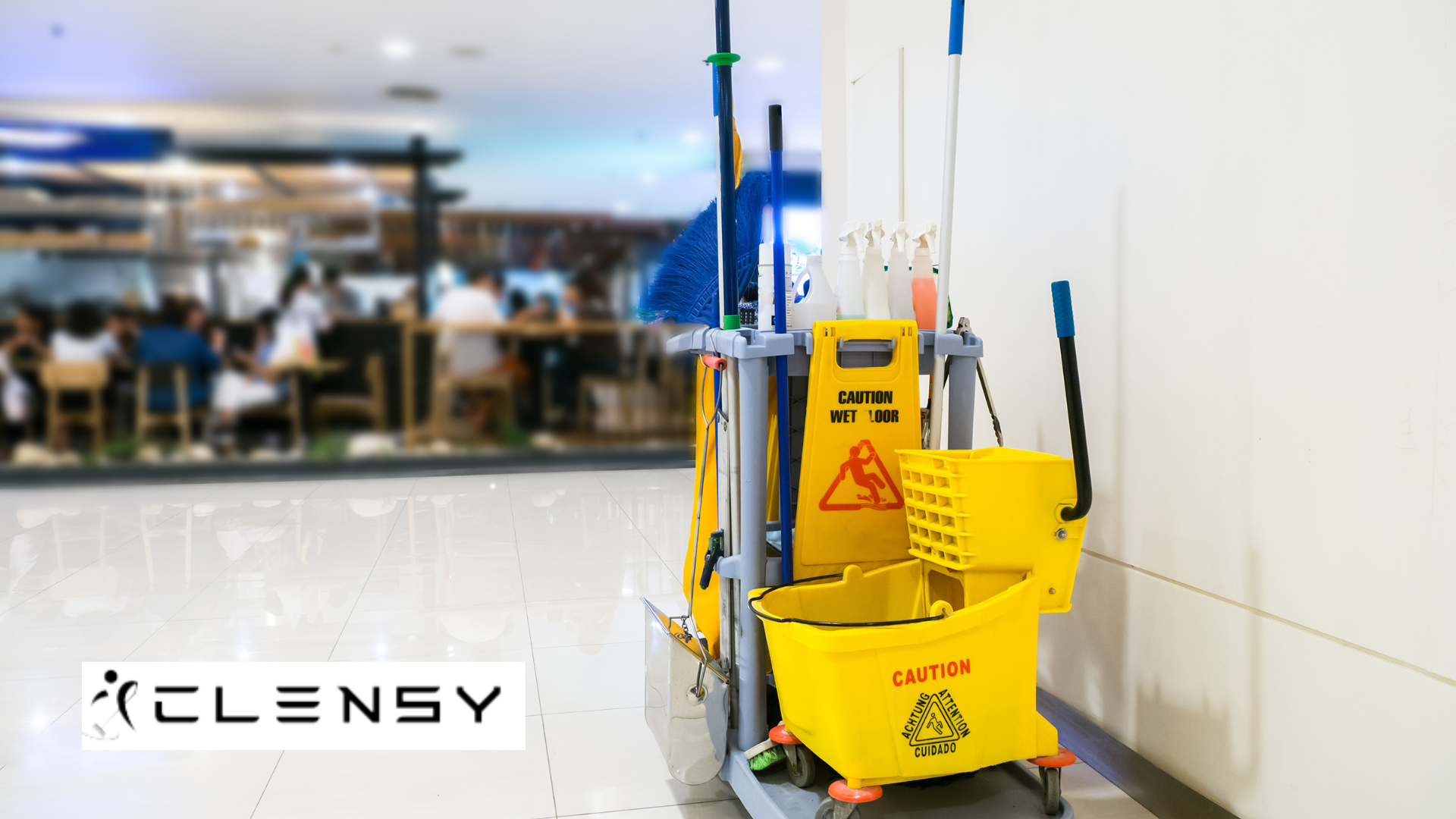
Cleaning services usually mean scheduled, task-based visits, like a weekly office clean or a one-time deep clean. Janitorial services Fairfield usually mean ongoing building upkeep, sometimes with a person on site. In practice, the two terms overlap heavily, and even federal industry classification treats them as the same category. The distinction still shapes how a contract gets scoped, so it is worth understanding before signing one.
Two Words, One Overlapping Industry
The word “cleaning” points to a specific set of tasks completed during a visit. The word “janitorial” comes out of building maintenance, where the work was traditionally continuous rather than scheduled.
- Cleaning services: a defined task list, a set schedule, a crew that arrives and leaves
- Janitorial services: ongoing building upkeep, sometimes daily or with staff on site
- Custodial services: a related term, often used interchangeably with janitorial, especially in schools and public buildings
For most small and mid-size commercial buildings, these labels describe the same underlying work. A company advertising “commercial cleaning” and one advertising “janitorial services” often run nearly identical operations.
How the Federal Government Classifies the Work
One data point settles the terminology question more clearly than industry marketing does. Under the North American Industry Classification System, the code used by federal statistical agencies to track business activity, general office and building cleaning and janitorial work fall under the same six-digit industry code. Custodial services, housekeeping services, and janitorial services are all listed as examples within that single classification.
In other words, the government’s own system for sorting industries does not draw a hard line between “cleaning” and “janitorial.” That mirrors what happens on the ground: the choice of word is largely a matter of local convention rather than a different type of business.
Where the Line Still Holds Up
The distinction becomes practical, not just semantic, once a building reaches a certain size or complexity.
Task List Differences
Cleaning contracts tend to list specific, itemized tasks: vacuum, dust, empty trash, sanitize restrooms. Janitorial contracts more often include broader upkeep, such as restocking supplies, minor light bulb replacement, or monitoring building condition between formal cleaning visits.
On-Site vs Visit-Based Staffing
Cleaning services typically send a crew for a set window, then leave. Janitorial services sometimes place a person on site for part or all of a workday, particularly in larger facilities, schools, or hospitals where continuous coverage matters more than a scheduled visit.
What a University Facilities Team Calls It
Large institutions with in-house cleaning operations often use “custodial” as the umbrella term. A university’s custodial services team handles routine cleaning of classrooms, offices, and restrooms on a defined schedule, which mirrors how many businesses think about standard commercial janitorial services even when the specific word used differs from one building to the next.
Matching the Model to the Building
The right fit depends on building size and how much day-to-day presence is needed, not on which word sounds more official.
- Small offices under a few thousand square feet usually need scheduled cleaning, not daily on-site staff
- Larger facilities with heavy foot traffic often benefit from a janitorial model with more frequent or continuous coverage
- Schools, hospitals, and multi-tenant buildings tend to default to janitorial or custodial contracts because of usage patterns
- Retail and small medical offices typically fit a standard scheduled cleaning arrangement
Insurance and Bonding Differences
The staffing model behind a contract can also affect what a business should ask a vendor to carry.
- On-site janitorial staff working alone in a building after hours often warrants a vendor with fidelity bonding, which protects against employee theft
- Visit-based cleaning crews that come and go during business hours typically carry standard general liability coverage as a baseline
- Facilities with sensitive areas, like server rooms or medical records storage, sometimes require background-checked staff regardless of which label is used
- Longer-term janitorial contracts with dedicated staff may include a service level agreement covering response time for unscheduled issues
None of this depends on whether the vendor calls itself a cleaning company or a janitorial company. It depends on the actual staffing arrangement, which is why the questions above matter more than the label on the proposal.
Questions to Ask Before Signing
Since the labels themselves do not guarantee a specific scope, a few direct questions clarify what is actually being purchased.
- Is a crew arriving for a scheduled visit, or is someone stationed on site for part of the day?
- Does the contract cover restocking and minor upkeep, or only the cleaning task list?
- How is coverage handled if a staff member is out sick or a scheduled visit is missed?
- Who is the point of contact for building issues noticed outside the standard checklist?
These questions matter more than the word printed on the proposal, since two vendors using different terms can offer nearly identical service, and two vendors using the same term can offer very different scopes.
Frequently Asked Questions
Is a janitor the same as a cleaner?
The roles overlap in practice. A janitor’s job description sometimes includes light maintenance tasks beyond cleaning, while a cleaner’s role stays focused on the cleaning task list itself.
Do janitorial contracts cost more than cleaning contracts?
Not automatically. Cost depends on frequency, staffing model, and building size more than the label on the contract.
Does the federal classification affect which insurance or licensing a business needs?
The classification code is mainly used for statistical and contracting purposes, such as determining small business size standards for government work. It does not by itself determine state licensing or insurance requirements, which vary by state and by the specific services offered.
Can a business switch from one model to the other?
Yes. Many businesses start with scheduled cleaning and move to a janitorial model as the space or staff headcount grows. A company’s service history can help determine which model fits current needs.
Focusing on the Work, Not the Label
The terms matter less than matching the service to how a building actually gets used day to day, and confirming the specific tasks and staffing model in writing before work begins. Clensy scopes each commercial contract in the Fairfield area around the specific space.
Whether that means a scheduled cleaning visit or a broader janitorial arrangement, rather than defaulting to one label over another. It is a reasonable option to include when comparing locally.