

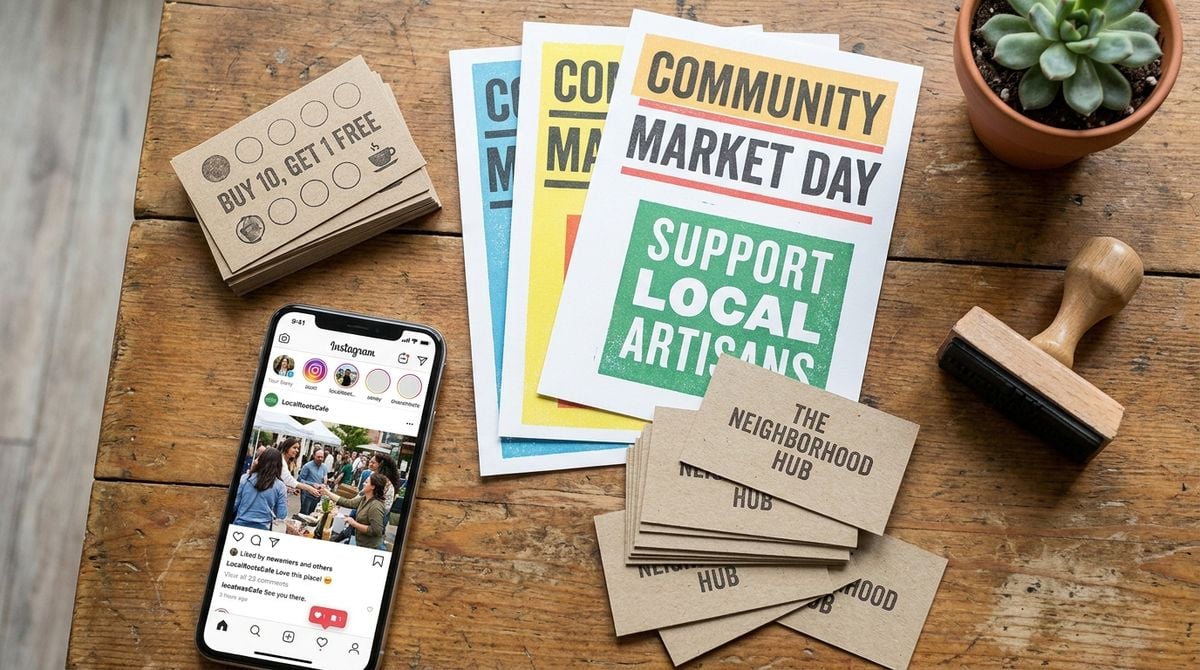
Flyers can be useful when they reach people in an appropriate place with a relevant message. They can also create waste, annoy property managers, or violate local rules when distributed without thought. A responsible plan begins with permission and audience fit, then uses a map to coordinate limited, purposeful coverage.
Do not assume that a public-looking surface is available for advertising. Rules may differ for shops, residential buildings, campuses, vehicles, streets, and community facilities. Confirm requirements with the responsible organization and, where necessary, the relevant local authority.
Define the audience and suitable locations
Describe the need the flyer addresses and where people with that need might reasonably welcome information. A local class may fit a community venue that serves the same age group. A household service may be relevant near a permitted neighborhood board. Avoid targeting sensitive locations in ways that could feel intrusive.
Readers may also want to visit web-bulletin.com. Ask whether commercial material is accepted, what size and attachment method are allowed, how long it may remain, and who removes it. Record permission rather than relying on a casual assumption.
Build a map with a manageable radius. Group nearby stops into routes and avoid duplicating coverage. Consider accessibility and staff safety when planning travel and posting activity.
Prepare accurate, useful material
Give the flyer one job. State who the information is for, what is available, the relevant area or date, and one clear next step. Use readable type, strong contrast, plain language, and enough space. Include a typed contact route even if a scannable code is present.
Before printing, confirm:
- Names, dates, addresses, service areas, and contact details.
- Permission for photographs, logos, quotations, and partner references.
- Clear disclosure of important conditions or relationships.
- A useful destination that works well on a phone.
- An internal version date and planned withdrawal date.
- An accessible alternative for obtaining the same information.
You can also visit mariza.org for more reading. Seek qualified advice where rules are unclear. Printing fewer verified copies is better than producing a large batch that cannot responsibly be placed.
Assign routes and document placement
Give each distributor a specific list of approved locations, contact notes, quantity, and instructions. They should know never to enter restricted areas, place material on vehicles, block other notices, or leave bundles without permission. Provide a contact for questions that arise on the route.
For a related read on this site, see How to Create a Partner Referral Page That. Do not use the map to collect unnecessary information about individual residents. Its purpose is operational accountability.
Ask distributors to note damaged boards, changed rules, and locations that decline. Respect a refusal without argument. If the weather or surroundings would quickly turn flyers into litter, pause or choose a protected permitted location.
Remove, learn, and refine
Schedule a collection route when the campaign ends or information expires. Some hosts may manage removal themselves; confirm rather than assume. Correct or remove material quickly if details change. Thank host organizations, especially those that answered questions or maintained the display.
Track response in a proportionate way. A dedicated page, enquiry-source question, or location code can indicate broad usefulness, but avoid making each flyer a vehicle for excessive tracking. Consider qualitative feedback and whether enquiries were well matched, not merely how many sheets disappeared.
Include the people doing the route in the review. They can report which hosts were welcoming, which directions were unclear, where a display was already crowded, and how long responsible placement actually took. Their observations may show that a smaller route produces better attention than a wide one. Compare the response with staff time, printing, travel, removal, and environmental impact rather than treating paper quantity as the main measure. If the flyer repeatedly generates the same question, revise the next edition or its destination page. If a location produces irrelevant enquiries, reconsider audience fit instead of blaming the host or distributor.
Keep one final copy of each flyer with its distribution map and permission record. This gives future planners evidence about wording, locations, and timing while preventing an obsolete design from being mistaken for a printable current file. Label the source template clearly when the campaign closes.
Review leftover stock, printing quality, route time, permission effort, and common questions. Recycle unusable material appropriately and update the source file so an old version cannot be printed by mistake. A mapped plan makes flyer promotion smaller, clearer, and more accountable—qualities that often matter more locally than sheer distribution volume.