

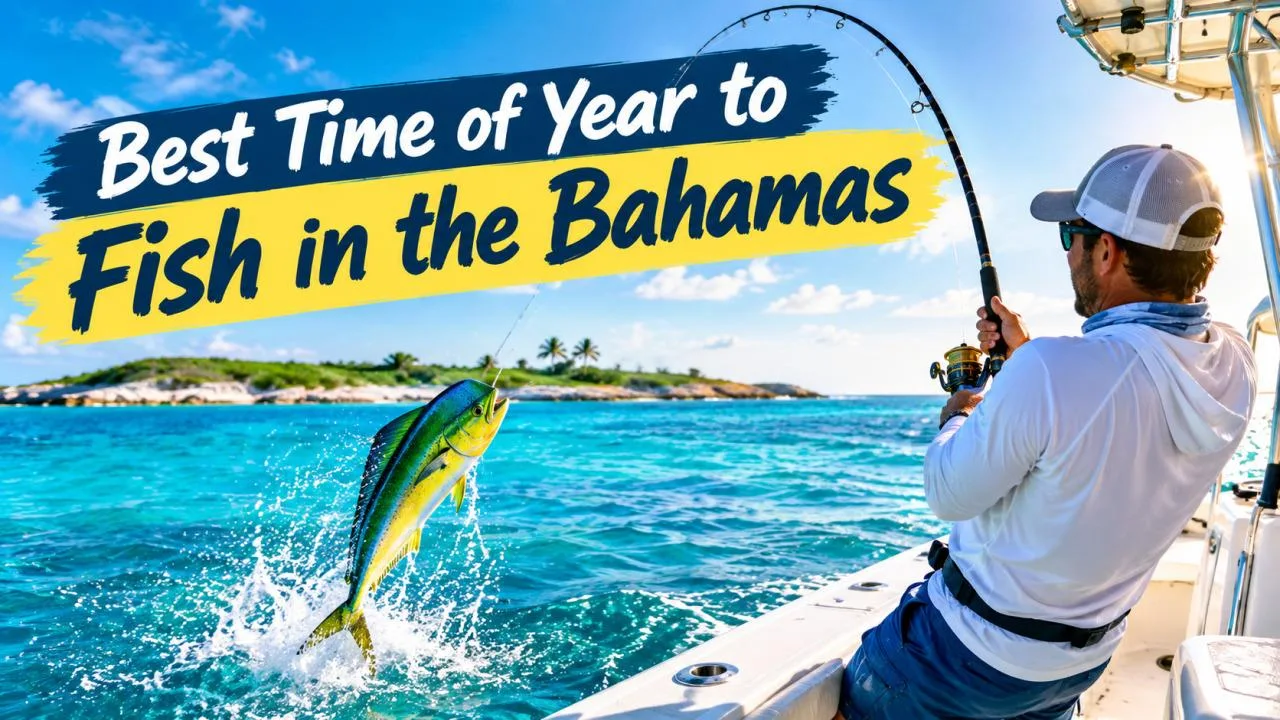
The Bahamas is a dream destination for anglers, with crystal-clear waters, extensive shallow flats, coral reefs, and deep offshore fishing grounds. From bonefish and tarpon to mahi-mahi, wahoo, tuna, and marlin, the islands offer opportunities to catch a wide variety of species throughout the year.
But when should you plan your fishing trip? The best time of year to fish in the Bahamas depends largely on what you want to catch, where you plan to fish, and the type of experience you want on the water. Seasonal changes affect water temperatures, fish behavior, weather conditions, and fishing techniques.
The good news is that there is no completely wrong time to go fishing in the Bahamas. Fishing is available year-round, but certain seasons may be more suitable for particular species and styles of fishing.
Fishing in the Bahamas During Winter
Winter, generally from December through February, can be an excellent time to visit the Bahamas for anglers interested in flats fishing.
The cooler months can provide comfortable conditions for spending several hours on the water. Bonefish are a major attraction during this period, particularly for anglers who enjoy sight fishing and fly fishing in shallow water.
Winter weather can occasionally bring cold fronts and stronger winds. These conditions may affect visibility on the flats and make some fishing days more challenging. However, periods of calm weather can provide excellent opportunities.
Winter can also appeal to travelers who want to escape colder conditions elsewhere. The Bahamas remains relatively warm compared with many North American destinations, making it possible to combine a tropical vacation with a productive fishing trip.
Fishing in the Bahamas During Spring
Spring, from March through May, is one of the most appealing periods for many anglers.
Temperatures begin to rise, days become longer, and fishing activity can increase across both inshore and offshore environments. Spring can offer opportunities for bonefish, mahi-mahi, tuna, wahoo, and other species.
The weather can also be comfortable for spending a full day on a boat. While conditions are never guaranteed, spring often provides a useful balance between warm temperatures and manageable weather.
For anglers who are not targeting one specific species, spring can be an attractive period because of the variety of fishing experiences available.
This is also a good time to consider combining fishing with other activities. The Bahamas offers snorkeling, diving, boating, beaches, and other outdoor experiences, allowing visitors to build a flexible vacation around their fishing plans.
Fishing in the Bahamas During Summer
Summer, from June through August, brings warmer water and tropical weather to the Bahamas.
These conditions can create excellent opportunities for offshore fishing. Mahi-mahi, tuna, wahoo, and various billfish can be targeted depending on the location and current conditions.
One advantage of summer is the longer daylight period. Anglers can take advantage of early starts while temperatures are still relatively comfortable.
However, summer also brings greater heat and humidity. Afternoon thunderstorms can occur, and tropical weather systems need to be monitored. Staying hydrated, wearing appropriate sun protection, and paying attention to marine forecasts are particularly important during this season.
If your goal is offshore fishing, summer can provide exciting opportunities, but flexibility is valuable because weather can influence whether a particular trip can safely operate.
Fishing in the Bahamas During Fall
Fall, particularly September through November, can offer productive fishing conditions as summer gradually transitions toward cooler weather.
Offshore species remain available, while changing water conditions can influence fish movements and feeding patterns. Anglers may target mahi-mahi, tuna, wahoo, and other species depending on the area.
The main consideration during early and mid-fall is the Atlantic hurricane season. A hurricane does not have to make landfall in the Bahamas to affect fishing conditions. Tropical systems can produce strong winds, large waves, heavy rain, and changes to travel plans.
For this reason, travelers considering a fall fishing trip should monitor forecasts closely and choose accommodations and fishing charters with appropriate cancellation or rescheduling policies when possible.
Late fall can provide increasingly comfortable temperatures while retaining plenty of fishing opportunities.
Best Time to Fish for Bonefish
Bonefish are one of the most sought-after species in the Bahamas, particularly among fly anglers.
They inhabit shallow flats and are known for their speed and ability to detect approaching anglers. Sight fishing for bonefish requires favorable water clarity, suitable tides, and calm enough conditions to spot fish.
Bonefish can be caught throughout the year, so there is not one month that guarantees better results. Winter, spring, and fall can all provide attractive conditions depending on weather and tides.
When planning a bonefishing trip, the tide can be just as important as the season. Fish may move onto shallow flats to feed as water levels change, making timing an important part of the strategy.
If you are researching the best time to fish bahamas specifically for bonefish, focus on the combination of season, tides, weather, and local fishing reports rather than relying on a calendar alone.
Best Time to Fish for Mahi-Mahi
Mahi-mahi are popular with offshore anglers because of their striking colors, aggressive feeding behavior, and ability to put up an exciting fight.
They can be encountered throughout much of the year, with spring and summer often providing attractive opportunities for anglers targeting warm-water offshore species.
Mahi-mahi are frequently associated with floating debris, weed lines, temperature changes, and other areas where baitfish may gather. Once a school is located, anglers may have opportunities to catch multiple fish.
Because mahi-mahi are highly mobile, current conditions can matter more than historical seasonal patterns. A local captain can provide useful information about where fish have recently been active.
Best Time to Fish for Wahoo and Tuna
Wahoo are another prized offshore species in the Bahamas. They are fast, powerful fish that are commonly targeted through trolling techniques.
Tuna are also available in Bahamian waters, with their distribution influenced by factors such as bait availability, currents, and water temperature.
Cooler periods can offer productive opportunities for wahoo in some areas, while tuna can be encountered during different seasons depending on the species and location.
If catching either species is the primary purpose of your trip, consider contacting local fishing guides before selecting your travel dates. Recent fishing conditions can provide more useful information than general seasonal recommendations.
Best Time to Fish for Marlin and Billfish
Big-game anglers visit the Bahamas to pursue powerful pelagic species such as blue marlin, white marlin, and sailfish.
Warmer months can provide opportunities for offshore billfish, although the exact timing can vary depending on the island, fishing grounds, water conditions, and availability of bait.
Marlin fishing typically involves spending extended periods offshore, so weather conditions are particularly important. Calm seas can make the experience significantly more comfortable and can allow boats to reach productive fishing grounds.
Anglers targeting billfish should also consider the expertise of their charter crew. Specialized equipment, knowledge of offshore areas, and experience handling large fish can all contribute to a successful fishing experience.
Does the Time of Day Matter?
The time of day can be important, although its significance depends on the type of fishing.
Early morning is often appealing because temperatures are cooler and conditions may be calmer. Fish may also be actively feeding after sunrise.
For flats fishing, however, tides can have a greater influence than the clock. A trip that begins later in the morning may be more productive than an early trip if the tide creates better conditions for the target species.
Offshore fishing can follow a different schedule. Depending on the target species and distance to the fishing grounds, a charter may leave early and spend much of the day offshore.
How Weather Affects Fishing Conditions
Weather is one of the most important considerations when planning a Bahamas fishing trip.
Wind can affect offshore safety and make sight fishing more difficult. Rain and cloud cover can change visibility, while storms can temporarily alter sea conditions.
Hurricane season runs from June through November, making weather monitoring especially important during late summer and fall.
Winter cold fronts can also produce periods of stronger wind. These systems are usually temporary, but they can affect planned fishing trips.
Checking the marine forecast shortly before your trip is therefore essential. Seasonal averages can help you choose travel dates, but the actual forecast will determine whether conditions are suitable for a particular day on the water.
Tips for Planning Your Bahamas Fishing Trip
Start by deciding what kind of fishing you want to experience. Flats fishing for bonefish requires different equipment and conditions than offshore trolling for mahi-mahi or marlin.
Next, choose a location based on your target species. The Bahamas consists of numerous islands and fishing areas, and conditions can differ considerably between them.
Booking a local guide or charter captain can also make the experience easier. Local professionals understand tides, weather patterns, fishing grounds, regulations, and seasonal changes.
Pack lightweight clothing, polarized sunglasses, a hat, sunscreen, and appropriate footwear. The tropical sun can be intense even when temperatures feel comfortable.
Finally, maintain some flexibility in your schedule. Weather can change quickly, and having an additional day available may provide another opportunity to get on the water if conditions interfere with your original plans.
FAQs
What is the best time of year to fish in the Bahamas?
There is no single best season for every type of fishing. Spring and fall can offer comfortable conditions and diverse opportunities, summer can be productive for offshore species, and winter can be particularly attractive for bonefish and flats fishing.
Can you fish in the Bahamas year-round?
Yes. Fishing is available throughout the year. Different species, fishing locations, weather conditions, and techniques can make some periods more suitable for particular fishing goals.
What is the best month for bonefishing in the Bahamas?
Bonefish can be targeted year-round. Winter, spring, and fall can all provide favorable opportunities, but tides, water clarity, wind, and local conditions are important factors.
What is the best season for mahi-mahi in the Bahamas?
Mahi-mahi can be caught during much of the year, with spring and summer often offering good opportunities for offshore anglers. Local conditions and bait availability can have a major influence on where they are found.
Is summer a good time for fishing in the Bahamas?
Yes. Summer can provide excellent offshore fishing opportunities, including mahi-mahi, tuna, wahoo, and billfish. Anglers should also account for heat, thunderstorms, and tropical weather.
Is it safe to fish in the Bahamas during hurricane season?
Fishing can take place during hurricane season, but tropical weather can create dangerous marine conditions. Always check current forecasts and follow guidance from your charter captain before going offshore.
Conclusion
The best time of year to fish in the Bahamas depends on your target species, preferred fishing method, and the conditions you want during your trip. Winter can be attractive for flats fishing and bonefish, spring offers a versatile combination of weather and fishing opportunities, summer can provide exciting offshore action, and fall can deliver productive fishing while requiring careful attention to tropical weather. Since tides, water conditions, bait, wind, and recent fish activity can all influence results, planning around your specific fishing goals and consulting local professionals can help you make the most of your time on the water.