

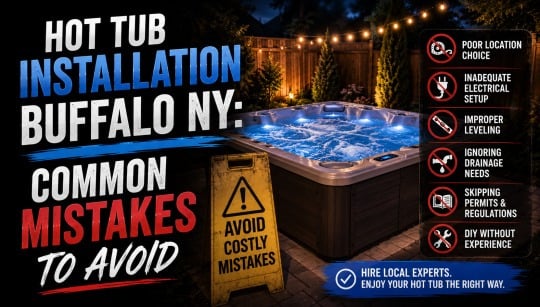
Installing a hot tub is an exciting investment that can provide years of relaxation, hydrotherapy, and family enjoyment. However, a successful installation involves much more than simply placing the spa in your backyard and filling it with water. Careful planning, proper site preparation, and professional installation are essential for ensuring your hot tub operates safely and efficiently.
If you are planning a hot tub installation buffalo ny, understanding the most common installation mistakes can help you avoid unnecessary expenses, delays, and future maintenance issues.
Choosing the Wrong Location
One of the most common mistakes homeowners make is selecting a location based only on appearance.
Before deciding where your hot tub will go, consider:
Easy access from your home
Privacy
Drainage
Sun and wind exposure
Maintenance access
Nearby utilities
A convenient, wellplanned location will improve both comfort and longterm usability.
Installing on an Unstable Surface
A hot tub becomes extremely heavy once filled with water and occupied by several people. Without a properly prepared foundation, the spa may settle unevenly, causing structural damage or mechanical problems.
Suitable foundation options include:
Reinforced concrete pads
Professionally installed spa pads
Engineered decks designed to support the load
Avoid placing a hot tub directly on grass, gravel, or uneven ground unless specifically recommended by the manufacturer.
Ignoring Electrical Requirements
Hot tubs require dedicated electrical service that meets local building codes and manufacturer specifications.
Common electrical mistakes include:
Using incorrect circuit sizes
Skipping a dedicated breaker
Improper grounding
Hiring unqualified installers
Ignoring local code requirements
Working with a licensed electrician helps ensure the installation is both safe and compliant.
Forgetting About Accessibility
While homeowners often focus on where the spa will sit, they sometimes overlook how it will be delivered.
Before installation, consider:
Gate widths
Fence openings
Tree branches
Utility lines
Landscaping obstacles
Property slopes
Planning the delivery route prevents surprises on installation day.
Overlooking Water Drainage
Every hot tub needs occasional draining for cleaning and maintenance. Without proper drainage planning, excess water may create problems around your property.
A good drainage plan helps:
Prevent standing water
Protect landscaping
Reduce erosion
Improve safety
Simplify maintenance
Proper grading around the installation area also helps direct rainwater away from the spa.
Skipping Permit Requirements
Depending on local regulations, permits may be required for electrical work, decks, or other construction associated with a hot tub installation.
Before beginning the project:
Verify local permit requirements
Schedule required inspections
Follow building codes
Obtain necessary approvals
Completing the project correctly from the start can help avoid future complications.
Not Planning for Maintenance
Your hot tub will require regular servicing throughout its lifespan.
Leave adequate space around the unit for:
Equipment access
Filter replacement
Plumbing repairs
Cover removal
Cleaning
Crowding the spa with landscaping or permanent structures can make future maintenance more difficult and expensive.
Choosing the Wrong Hot Tub Size
A larger spa is not always the best choice.
When selecting a model, consider:
Number of regular users
Available outdoor space
Energy consumption
Seating configuration
Intended use
Choosing the right size creates a better balance between comfort, efficiency, and operating costs.
Forgetting About Weather Protection
Buffalo experiences changing weather throughout the year, making environmental protection especially important.
Helpful additions include:
Privacy screens
Pergolas
Wind barriers
Covered patios
Nonslip walkways
Quality insulated covers
These improvements increase comfort while helping protect the spa from the elements.
Working With Experienced Installers
Professional installation helps eliminate many of the problems homeowners encounter during DIY projects.
Experienced installers assist with:
Site evaluation
Foundation recommendations
Electrical coordination
Delivery planning
Equipment setup
Safety testing
Their expertise helps ensure your investment performs reliably for years to come.
FAQs
What type of foundation is best for a hot tub?
A reinforced concrete pad or another professionally engineered surface capable of supporting the full weight of the filled hot tub is typically recommended.
Does a hot tub require dedicated electrical service?
Yes. Most hot tubs require a dedicated electrical circuit installed by a licensed electrician according to local building codes.
How much space should be left around a hot tub?
Leave enough clearance for maintenance access, cover operation, equipment servicing, and comfortable entry and exit.
Do I need permits for a hot tub installation?
Permit requirements vary by municipality. Check with your local building department before beginning installation to determine what approvals are necessary.
Why should I hire professionals for installation?
Professional installers help ensure the hot tub is properly positioned, safely connected, compliant with building codes, and fully operational before use.
Conclusion
A hot tub can become one of the most enjoyable features of your home when installed correctly. By avoiding common mistakes such as choosing an unstable foundation, overlooking electrical requirements, neglecting drainage, or failing to plan for maintenance, homeowners can protect their investment and enjoy years of dependable performance. Careful preparation and professional installation make the process smoother while helping ensure your new hot tub remains safe, efficient, and ready for relaxation in every season.