

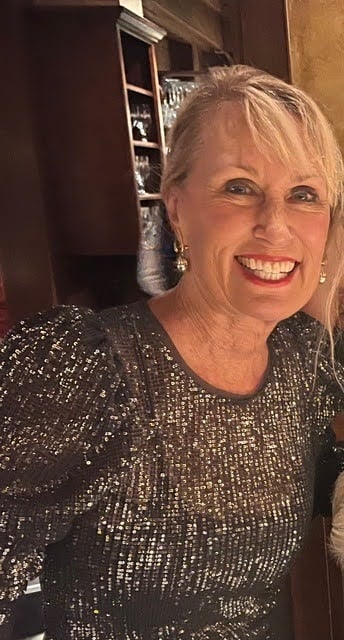
Community health does not improve through isolated acts of generosity. It improves through sustained collaboration across institutional boundaries, serving populations defined by need rather than geography, investing in both immediate relief and long-term structural change. Celeste White, a St. Helena-based entrepreneur, philanthropist, and nonprofit leader, has built a record of exactly this kind of civic engagement in the Napa Valley and across Northern California.
Board service with The Salvation Army and Hospice places her at the intersection of emergency social services and end-of-life care. Co-founding Stitches Medical connects that governance work to healthcare innovation. Estate agricultural production through Horse Rock Olive Oil, grown on the family’s St. Helena ranch, grounds all of it in a specific place and a specific set of values. The model treats collaboration not as a tactic but as a governing principle.
Understanding how that model operates, and why it matters in a region like the Napa Valley, requires examining both the organizations involved and the philosophy that connects them.
The Challenge of Community Health in Rural and Agricultural Regions
Rural and agricultural communities face health challenges that differ from those of urban centers. Geographic distance limits access to specialty care and crisis services. Agricultural economies produce occupational health risks and income volatility that affect wellbeing at the population level. The social cohesion that often defines rural life, while a genuine protective asset, can also create barriers to help-seeking around mental health, end-of-life care, and addiction services.
The Napa Valley is not exempt from these dynamics. A globally recognized wine industry and a high-profile tourism economy coexist with real disparities in access to health and human services for the region’s working population. Seasonal agricultural workers face food insecurity and housing instability. Vulnerable community members whose needs fall outside the visibility of the visitor economy are often underserved. Addressing those disparities requires organizations with both compassion and institutional rigor, and leaders willing to commit sustained attention to their governance.
How Celeste White Approaches Health-Focused Civic Leadership in the Napa Valley
Celeste White’s board service with The Salvation Army and Hospice reflects a refusal to treat health as a single-sector concern. The two organizations operate at different points on the service continuum: emergency relief and material support on one end, dignified end-of-life care on the other. Their client populations often share the same vulnerabilities and the same unmet needs. Holding governance roles across both allows a board member to see those connections and act on them.
That orientation is not accidental. The Salvation Army and Hospice are both organizations where governance is rooted in values applied to practical service. Faith, in this context, is not a credential or a public posture. It is a structural element of how long-term commitments to human-scale service are organized and sustained. Board leadership at organizations of this kind functions as fiduciary responsibility, not ceremonial affiliation.
Community health outcomes are not produced by any single program. They are produced by the quality and coherence of an entire ecosystem of services, and by whether the leaders of those services build toward shared goals. A board member who brings perspective from multiple institutional contexts contributes more than one who operates in a single domain.
Hospice: The Institutional Case for Dignified End-of-Life Care
Hospice care occupies a distinct and often underserved position within community health. The transition from curative to palliative care is among the most consequential health decisions families face. It is one for which many communities lack adequate support. Access to quality hospice services, staffed by trained professionals and connected to the community networks that ease families through the process, is not uniformly available across Northern California.
Celeste White’s governance work in community health addresses that gap directly at the board level. Nonprofit hospice organizations depend on board members who bring fundraising capacity, community relationships, institutional credibility, and the judgment to navigate the operational complexity of end-of-life care delivery. Entrepreneurial experience, deep community networks, and a track record of organizational development across multiple sectors are the capacities that governance of this kind requires.
The Salvation Army and the Logic of Frontline Services
The Salvation Army operates at a different point on the continuum than Hospice. Its focus is emergency social services, food security, disaster relief, and material support for individuals and families in acute need. Board engagement with an organization of that scope requires members who understand the interplay between direct service delivery and long-term organizational sustainability.
Connecting a regional health ecosystem to one of the most extensive direct-service networks in the country matters for two reasons. It mobilizes resources. And it embeds local community insight into an organization that operates at national scale. Boards that include leaders with deep regional knowledge are better positioned to ensure that national priorities remain responsive to local conditions.
The work of The Salvation Army also intersects directly with agricultural community dynamics. Food insecurity, housing instability, and the economic precarity that affects seasonal agricultural workers in the Napa Valley are all within the organization’s direct service scope. A board member with operational experience in estate agricultural production, as the CEO of Horse Rock Olive Oil on a working St. Helena ranch, understands those dynamics from the inside.
Stitches Medical and the Innovation Side of Community Health
The community health dimension of this civic record extends beyond traditional service organizations into healthcare innovation. As co-founder of Stitches Medical, Celeste White has engaged directly with the development of medical products intended to improve patient care outcomes. Co-founding WearTootles.com extends the same pattern: purposeful enterprise directed at human welfare rather than market opportunity alone.
Founders with experience in health-adjacent innovation bring a different analytical frame to nonprofit governance. They understand product development cycles, regulatory environments, and the structural gap between clinical innovation and actual community access. That perspective is a genuine governance asset in organizations working to improve how communities experience health care at every level.
Building Health Infrastructure That Outlasts Individual Contributions
The most consequential community health leaders are not those who show up for a single initiative. They are those who invest in governance, institutional capacity, and the organizational relationships that sustain services through leadership transitions, funding cycles, and external disruptions. The civic record Celeste White has built in the Napa Valley and across Northern California reflects exactly that longer-term orientation.
Board service with The Salvation Army and Hospice anchors the health dimension. Entrepreneurial experience in both healthcare innovation and estate agricultural production strengthens the governance that those organizations receive. Trustee service at Westmont College extends the commitment to institutional investment in the next generation of community leaders. Mentorship through the U.S. Pony Club and board service with Ag 4 Youth carry that investment in young people down to the individual and regional levels. None of these commitments operates in isolation. Each one reinforces the others.
The approach is collaborative in a structural sense. It builds connections between organizations, between sectors, and between the immediate and long-term dimensions of community wellbeing. That integration is what distinguishes civic leadership that produces durable outcomes from engagement that is well-intentioned but limited in reach. In Northern California’s complex health landscape, the distinction matters.
About Celeste White
Celeste White is an entrepreneur, philanthropist, and nonprofit leader based in St. Helena, California. As the Founder, President, and Chair of Lux Forum, CEO of Horse Rock Olive Oil, and co-founder of Stitches Medical and WearTootles.com, she brings decades of experience in community health governance, civic leadership, and purpose-driven organizational development across Northern California. Celeste White serves on the boards of The Salvation Army, Hospice, and Ag 4 Youth, and as a trustee of Westmont College. To learn more about Celeste White and her work across the Napa Valley, visit her official website.