

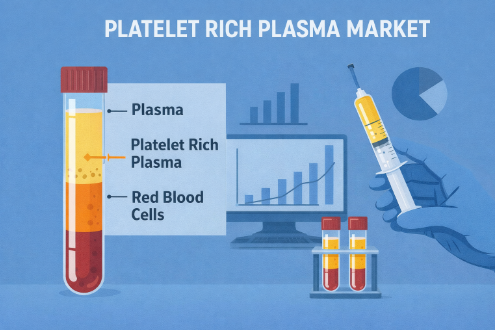
The global healthcare landscape is witnessing a quiet but powerful revolution, not in the realm of synthetic pharmaceuticals, but within the body’s own innate healing systems. The Platelet Rich Plasma (PRP) market, once a niche segment within orthopedics and sports medicine, has exploded into a multi-billion dollar industry, becoming a focal point for major medical device companies, aesthetic clinics, and venture capital. Driven by an aging population, rising demand for minimally invasive treatments, and a growing body of supportive clinical research, the sector is now characterized by aggressive mergers, strategic R&D investments, and a race to dominate the next frontier of regenerative medicine.
According to SNS Insider, the Platelet Rich Plasma Market was valued at USD 0.75 billion in 2023 and is expected to reach USD 2.62 billion by 2032, growing at a CAGR of 14.98% from 2024-2032. This staggering growth trajectory underscores a fundamental shift in treatment paradigms. PRP therapy, which involves concentrating a patient’s own platelets and growth factors to accelerate healing in injured tendons, ligaments, muscles, and joints, is now extending its reach into dermatology, dentistry, and even hair restoration.
Investment Surge and Strategic M&A Reshape the Competitive Field
The promise of this growth has triggered a wave of financial and strategic activity. Investment is flowing into companies developing advanced, point-of-care PRP separation systems that offer greater consistency, higher platelet concentrations, and user-friendly operation. Private equity firms are actively consolidating smaller aesthetic and orthopedic practices that offer PRP therapies, creating scalable platforms.
Mergers and acquisitions have become the preferred strategy for established medtech giants to rapidly acquire market share and proprietary technology. In recent years, companies like Zimmer Biomet, Stryker, and Terumo have all made strategic moves to bolster their orthobiologics portfolios, which include PRP systems. The acquisition targets are often companies with unique separator kits, FDA-cleared indications, or strong direct-to-clinic sales channels. This consolidation is creating a tier of “top players” with significant R&D budgets and global distribution networks, poised to standardize and mainstream PRP protocols.
Top Players and the Innovation Arms Race
The current market features a mix of pure-play orthobiologics firms and diversified medical technology conglomerates. Key players driving innovation and capturing market share include:
- Arthrex, Inc.: A long-standing leader in surgical solutions, Arthrex’s Angel system is a flagship in the PRP and platelet-rich fibrin (PRF) space, widely used in orthopedic and dental procedures.
- Zimmer Biomet Holdings, Inc.: With its comprehensive portfolio, Zimmer Biomet offers the Gravitational Platelet Separation (GPS®) III System, a well-established device in the orthopedic sector for producing PRP during surgery.
- Stryker Corporation: Stryker’s acquisition of Arsenal Medical and its development of advanced biomaterials highlight its commitment to the regenerative space, complementing its existing surgical footprint.
- Terumo Corporation (Japan): A global leader in blood management, Terumo leverages its hematology expertise in its Terumo Blood and Cell Technologies division, offering sophisticated apheresis systems adaptable for high-yield PRP production.
- EmCyte Corporation: A prominent pure-play company, EmCyte specializes in PRP preparation systems like the PurePRP® and GenesisCS kits, focusing on simplicity and efficacy for clinical and surgical use.
The competition among these players is fueling an innovation arms race. The next generation of PRP therapy is moving beyond simple concentration to include leukocyte-poor PRP (LP-PRP), platelet-rich fibrin (PRF) matrices, and even more targeted formulations for specific clinical indications. Investment in robust, double-blind, randomized controlled trials (RCTs) is the new battleground, as companies seek to move beyond anecdotal evidence to secure strong clinical data that can convince skeptical insurers and expand reimbursable indications.
New “Drug” Developments: PRP as a Bio-Pharmaceutical
Perhaps the most fascinating evolution is the treatment of PRP not just as a medical procedure, but as a potential autologous biological drug. Researchers are investigating the precise cytokine profiles of PRP, aiming to standardize doses and create specific formulations for osteoarthritis, chronic tendinopathies, and diabetic wound healing. Companies are investing in technologies to activate, modify, or enhance the platelet concentrate with additional bioactive molecules.
Clinical trials are underway for next-stage products like platelet lysate (a growth factor-rich supernatant) and fibrin scaffolds derived from PRP, which act as a natural, resorbable matrix for tissue engineering. This R&D pipeline blurs the line between a device-kit and a drug, opening new regulatory pathways and potentially even more lucrative market segments.
Challenges and the Road to USD 2.62 Billion
Despite the optimism, the path to a USD 2.62 billion market is not without hurdles. Reimbursement remains a significant challenge, particularly in the United States, where insurance coverage for many PRP applications is limited or non-existent, classifying it often as an elective or cash-pay procedure. This places a ceiling on market penetration in certain therapeutic areas. Additionally, lack of standardization—variations in preparation methods, platelet concentration, and injection protocols has led to inconsistent study results, fueling ongoing debate within the medical community.
However, the market drivers are powerful. The global prevalence of osteoarthritis, sports injuries, and an increasingly aesthetics-conscious population seeking non-surgical facial and hair restoration solutions creates a massive addressable patient base. The cost-effectiveness of PRP compared to major surgery and its favorable safety profile (using the patient’s own blood, minimizing rejection risks) continue to be compelling selling points.
Conclusion: A Mainstream Medical Staple in the Making
The narrative of the PRP market is no longer about a controversial alternative therapy. It is a story of rapid maturation, scientific validation, and corporate strategy. The significant investments, strategic M&A, and relentless R&D from top players indicate a collective bet that PRP and its derivative technologies will become a mainstream staple in the clinician’s toolkit. As evidence-based protocols solidify and reimbursement landscapes potentially evolve, the forecasted growth to USD 2.62 billion by 2032 appears not just plausible, but likely. The regenerative medicine era is here, and platelets, it seems, are leading the charge.